Awareness and early diagnosis
VČAS
For a year, I lived with symptoms I put down to stress and overwork.
I changed jobs and slowed down, but my symptoms were underestimated. After a focal seizure, an ambulance took me to hospital — and eventually to unexpected surgery.
Read the full storyMy story
A tumour does not shout. It speaks quietly.
01 · April 2025
A false lead: autoimmunity
Blood tests showed high autoimmune markers, and I was referred to a rheumatologist. I was prescribed immunosuppressants, which I asked to stop after very severe side effects. A visit to the Institute of Rheumatology and several further examinations eventually ruled out a rheumatic disease.
02 · November 2025
I changed — and nobody knew why
I became more tearful and anxious — it was mistaken for burnout. My manager noticed the changes too. I now know that changes in mood and behaviour can also be among the quiet symptoms of a brain tumour.
03 · A new job and a career break
I tried slowing down
At my new job, I felt under pressure and unusually sensitive, so I decided to leave at the end of my probation period. I took a five-month career break to focus on resolving my symptoms. Physiotherapy and chiropractic treatment helped a little, but the muscle jerks kept returning intermittently. Looking back, after evenings involving alcohol, I would wake around 3 a.m. with mild seizures that I interpreted as muscle twitching, spasms and a problem for physiotherapy.
04 · December 2025 – October 2026
Ten months of medical appointments
I put my symptoms down to stress, overwork and changing jobs. Doctors looked for the cause in my back. These appointments show the conclusions at the time and how I understand them now.
05 · 12. 10. 2026
The day the silence broke
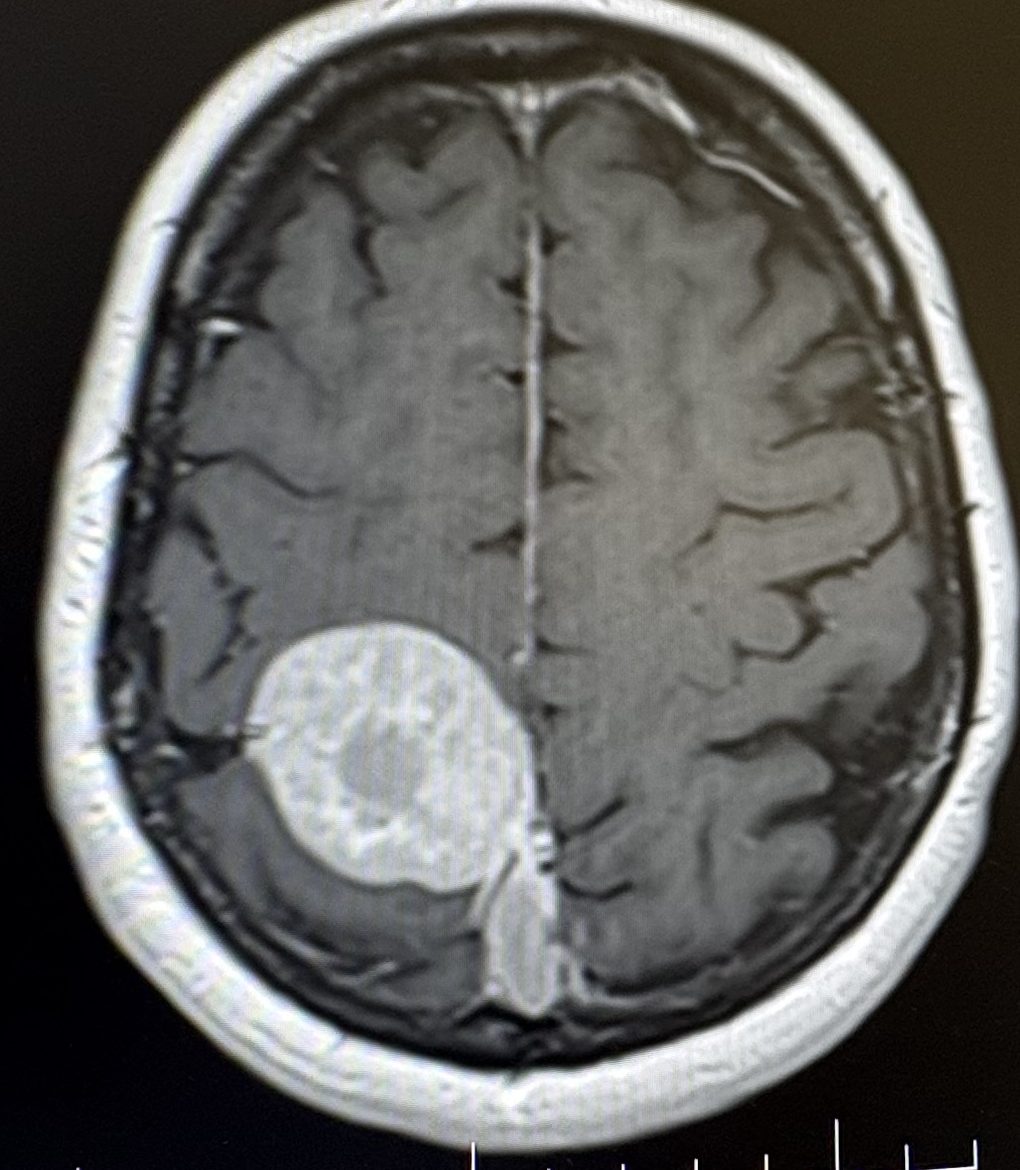
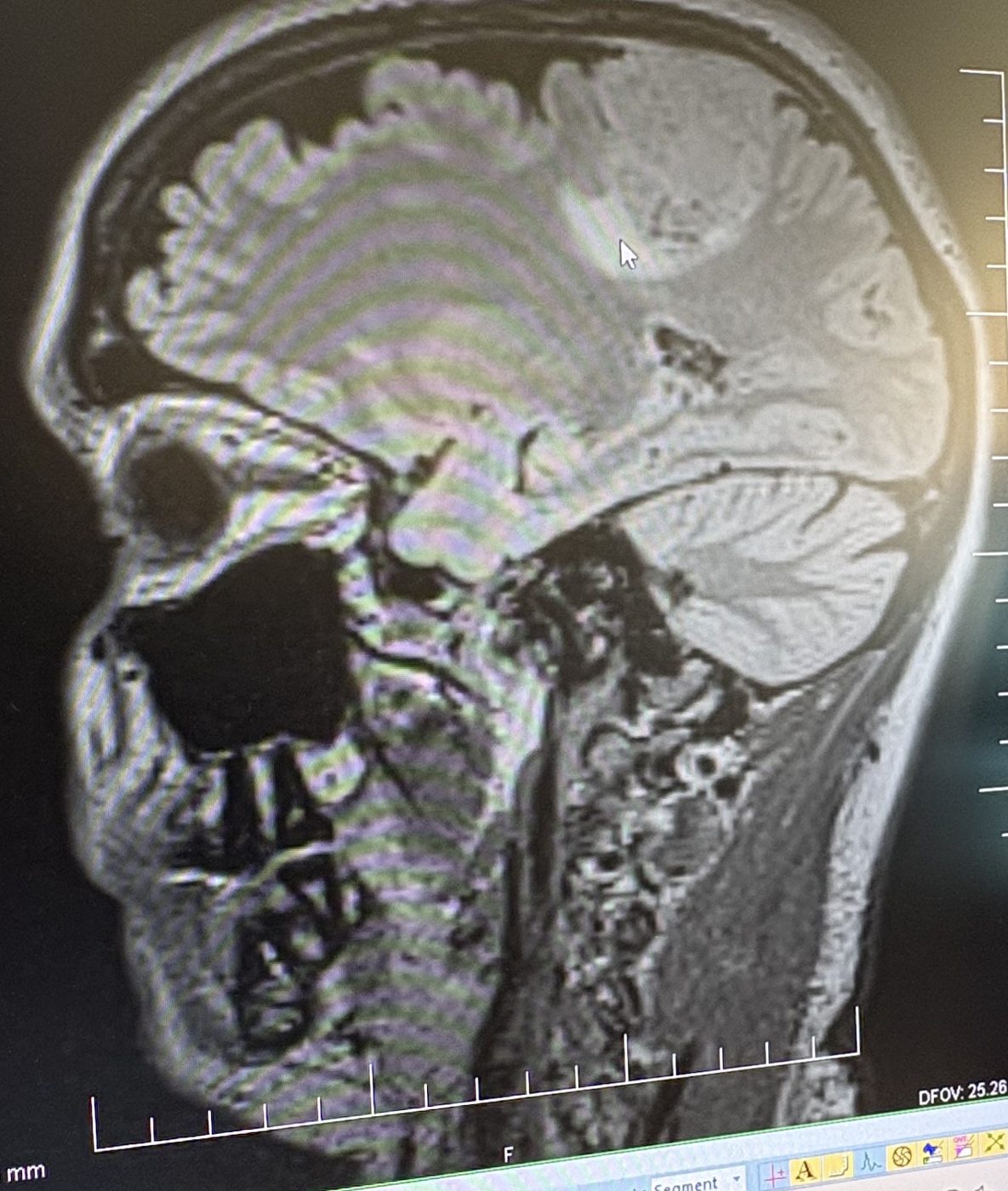
After a seizure on the afternoon of 11 October 2026, an ambulance took me to hospital from a Sunday walk. A contrast-enhanced brain MRI revealed what had gone unseen for ten months.
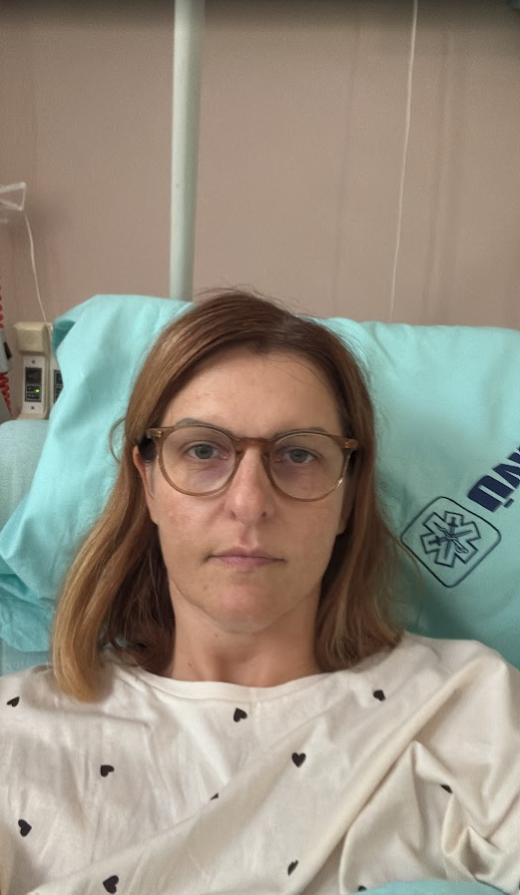
06 · Just before surgery
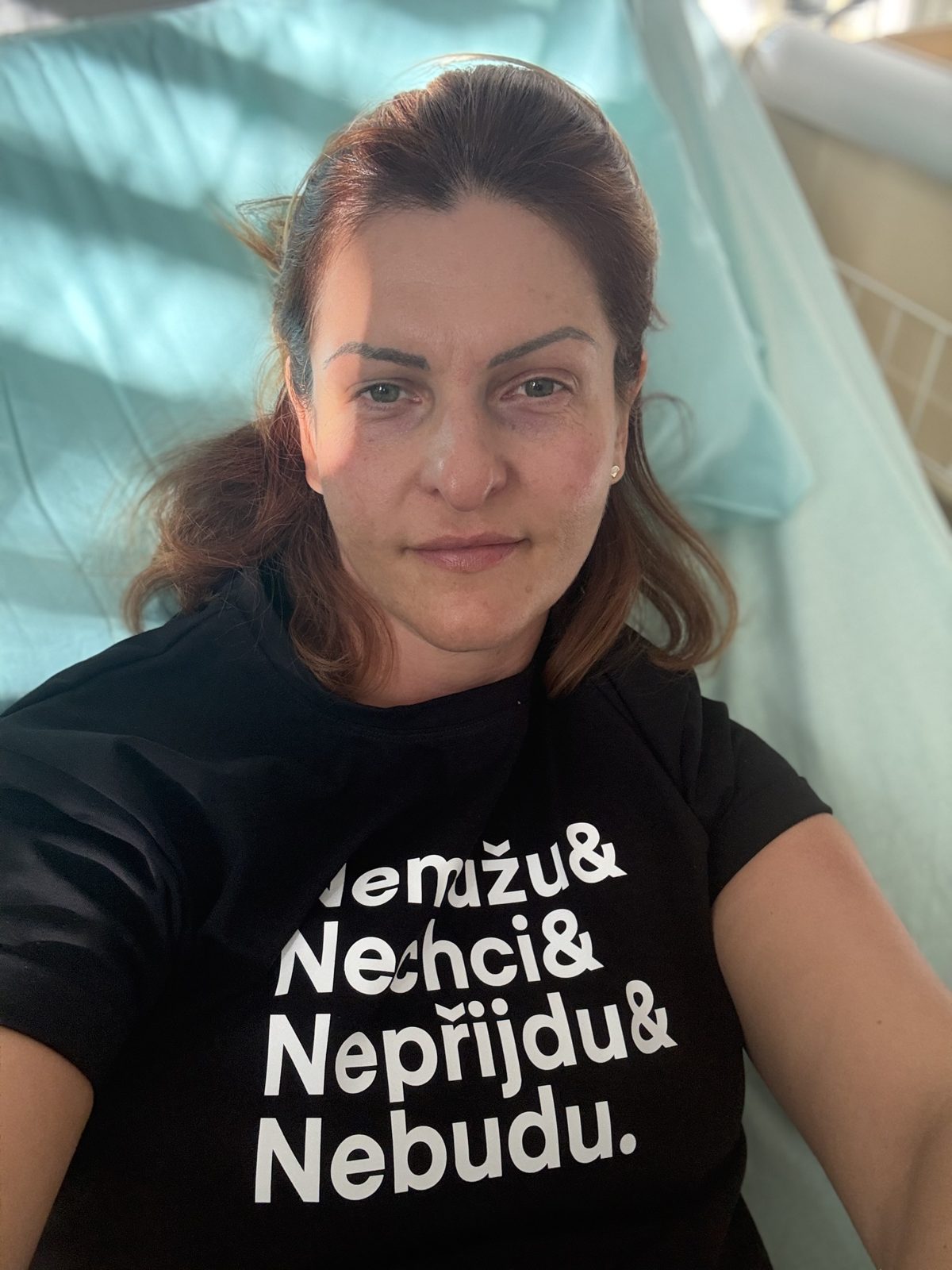
I cannot & I do not want to & I will not come & I will not.
Unexpected surgery. My last selfie before the operating theatre — and a T-shirt whose words suddenly took on a completely different meaning.
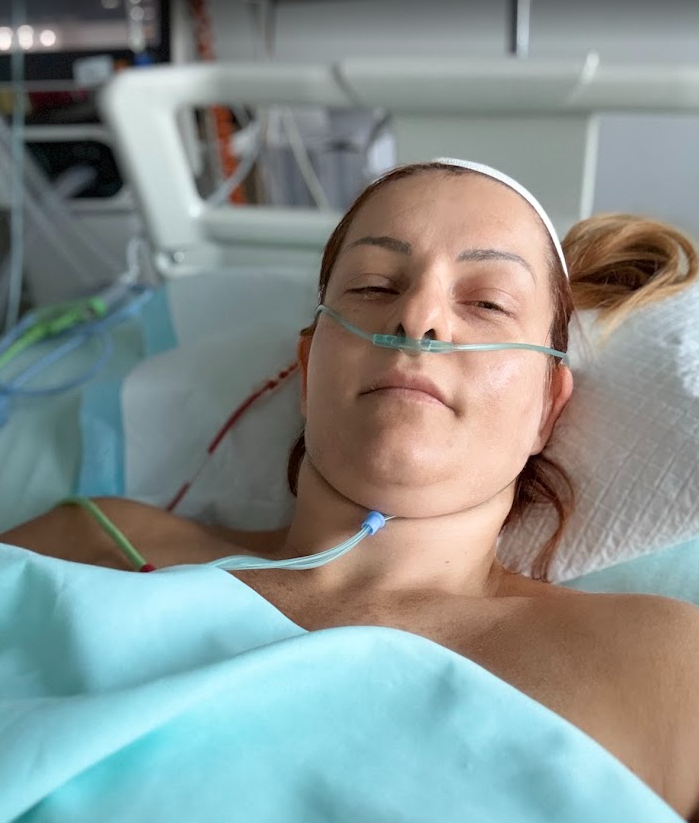
07 · After surgery — intensive care
Waking up
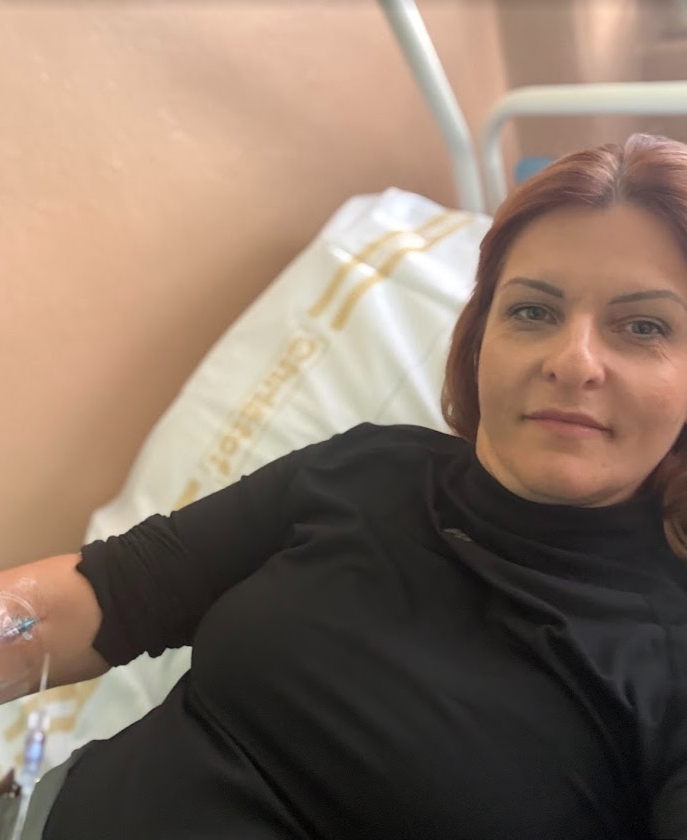
Oxygen, monitors, tubes. The care of the doctors and nurses — the people I owe my chance to tell this story.
08 · The scar
The mark that remains
The scar reminds me that listening to your body is not weakness. If I had heard its signals earlier, my journey might have been different.
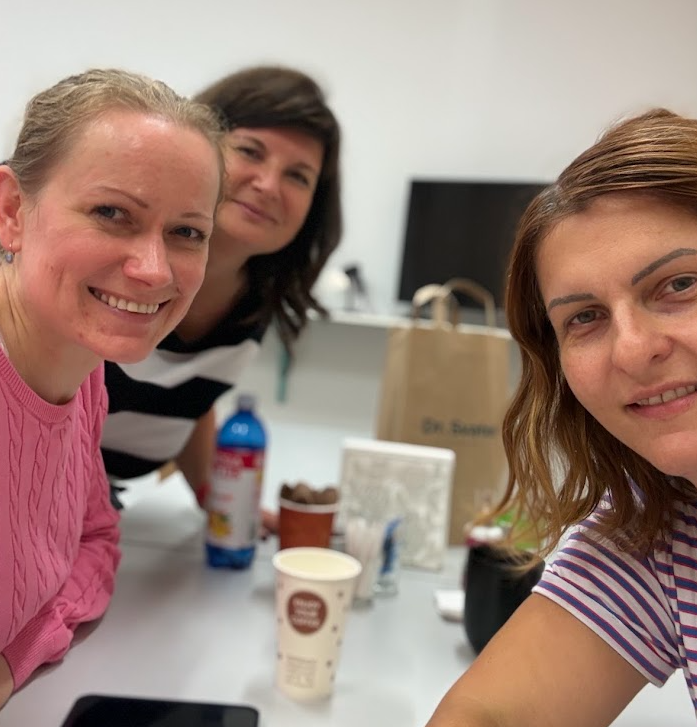
09 · Support from loved ones
My two Jitkas
I will keep my family private. But a very big thank you for their support throughout this situation and their care during those days goes to my two friends, both named Jitka.
Practical guide · Czech
Caring for a scalp scar after surgery →
Family and loved ones · Czech
Telling your family what is happening →
The hardest phone calls: to my children, my parents and my husband on Kilimanjaro — and asking for help with the children.
Official source · Czech
Patient information before admission ↗
Current and complete admission instructions are available only on the hospital's official website.
“Overwork and a tumour can feel alike. When symptoms persist, keep asking for answers and discuss whether a brain MRI is appropriate.”
Why I’m sharing this
The symptoms were so vague that a tumour never crossed my mind.
Looking back, I can recognise symptoms going back perhaps a year and a half. But how could I have known I was having a seizure? Why would I have asked for a brain scan when I had no headache?
I do not know of a proven way I could have prevented my tumour through diet or lifestyle. I was told its growth might be linked to hormonal changes and pregnancy, and that it may have taken about ten years to reach this size. This is what I was told about my own case, not a general medical conclusion.
Symptoms I overlooked
- Feeling tearful and anxious — it looked like burnout.
- Muscle twitching and jerks that kept coming back.
- Numbness and tingling in my leg, including during sleep around 3 a.m.
- Pain shooting from my body up into my head and waking me at night.
Each symptom could be attributed to stress, my back or overwork. If symptoms keep returning for months without a clear explanation, tell your doctor about the whole pattern.
What to tell your doctor — four simple sentences
- “This has been happening for several months and is not improving.”
- “It happens at night or while I am asleep too.”
- “My mood or behaviour is changing, and I do not know why.”
- “Nobody has examined my head. Could a brain MRI be appropriate?”
A seizure, sudden severe headache, paralysis or sudden difficulty speaking or seeing? Seek emergency help now. Call 155 in Czechia, 112 in the EU, or your local emergency number elsewhere.
If my head had been scanned earlier, this story might have been very different. An estimated ten years of quiet growth. Ten months looking elsewhere, when one picture of my brain held the answer.
I cannot tell you how to avoid a brain tumour. But I can tell you what I wish I had done sooner: when your body has not felt like itself for a long time, and no explanation fully fits, keep asking for answers. Discuss with your doctor whether your brain needs to be examined.
This website grew out of my personal experience and the practical information I needed at the time. It does not replace a doctor or provide medical advice. It shows how easily quiet symptoms can be missed. I hope that, in a similar situation, you will not wait as long as I did.